唐大明宫含元殿遗址出土的瓦当赏析
2016-02-15 16:20阅读:
瓦当 瓦当当径9~
15厘米,几乎都是莲花纹。一般为轮内饰
联珠纹,当面为莲花纹。按其花瓣的繁、简、肥、瘦、花蕊和当径大小区分,约有十多种。一般唐初多单瓣,瓣痩
长而繁密;盛唐多双瓣,瓣肥厚而短壮。
图163为唐大明宫含元殿遗址出土的部分莲花纹瓦当。
图164为唐大明宫含元殿遗址出土的部分表面处理的
烧结铺地砖和筒瓦、板瓦。
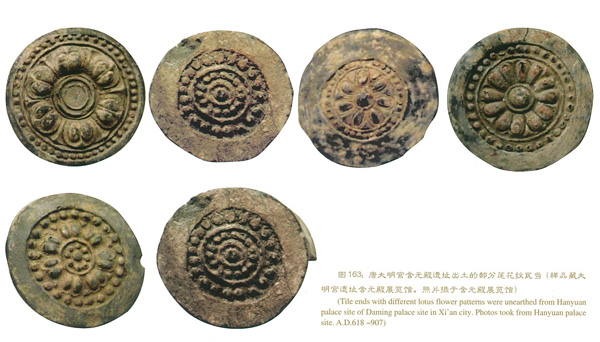
图163:唐大明宮含元殿遗址出土的部分莲花纹瓦当(样品藏大明宮遭址含元殿展览馆,照片摄于含元殿展览馆世界砖瓦网)
(Tile
ends
with
different
lotus
flower
patterns
were
unearthed
from
Hanyuan
palace
site
of
Darning
palace
site
in
Xi'an
city.
Photos
took
from
Hanyuan
palace
site.
A.D.618
?907)
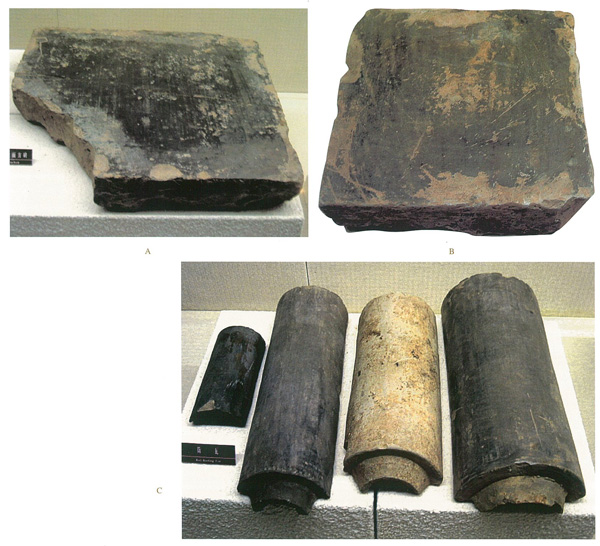
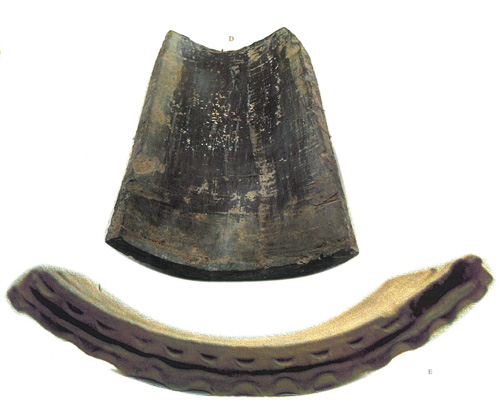
图164:唐大明宮含元殿遗址出土的部分表面处理的烧结铺地砖和筒瓦、板瓦(A、大型青棍[黑色]素面铺地方砖边长50厘米,厚9厘朱:B、小型靑棍[黑色]素面铺地方砖
,边长35厘米,厚7厘米;C、表面经打磨处理(靑棍)的筒瓦;D、大板瓦,宽36厘米,厚3.1厘朱;E、花边重唇板瓦;样品藏大明宮遣址含元殿展览馆,照片摄于含元殿展览馆)
(The
parts
of
paving
bricks,
semicylindrical
tiles,
segment
tiles
with
double
laciness
and
segment
tile
that
surface
were
treated
were
unearthed
from
Hanyuan
palace
site
of
Darning
palace
site
ot
Tang
dynasty
in
Xi'an
city
show
in
Fig.
164.
We
can
see
the
“Qingun”paving
brick
and
roofing
tile,
which
are
famously
in
history
of
China.
The
bricks
and
tiles
of
surface
polished,
infliction
colorant
surface
were
excavated
from
Hanyuan
palace
site
(A.D.663,
more
than
1300
years
by
this
time)
in
ihe
capital
(Xi'an
city)
of
Tang
dynasty,
which
was
“Qinggun”
brick
and
tile
that
was
recorded
after
in
the
book
“Construction
Ways
and
Means”
(A.D.l
103
year,
more
than
900
years
ago)
in
North
Song
dynasty.
It
is
very
unfominate
that
these
methods
of
manufacture
were
lost.
Photos
took
from
Hanyuan
palace
site.)
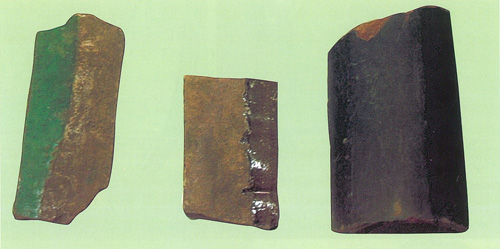
图165:唐大明宮含元殿遗址出土的部分琉璃筒瓦(样品藏大明宮遗址含元殿展览馆,照片摄于含元殿展览馆
)
(The
parts
of
Liuli
(colored
glaze)
semicylindrical
tiles
were
unearthed
from
Hanyuan
palace
(A.D.663.
more
than
1300
years
by
this
time)
of
Tang
dynasty
show
in
Fig.
165.
Photos
took
from
Hanyuan
palace
site)
在含元殿遗址还发现了绿釉、墨绿釉、褐色釉的琉璃筒瓦(图165)。在琉璃瓦的制作上似乎采用了唐三彩的技艺。试想唐代高台大殿屋顶上的琉璃瓦筒瓦和青棍瓦组成的屋面,必定富丽堂皇。
文章来源:世界砖瓦网
www.prk88.com

