但由于电动汽车
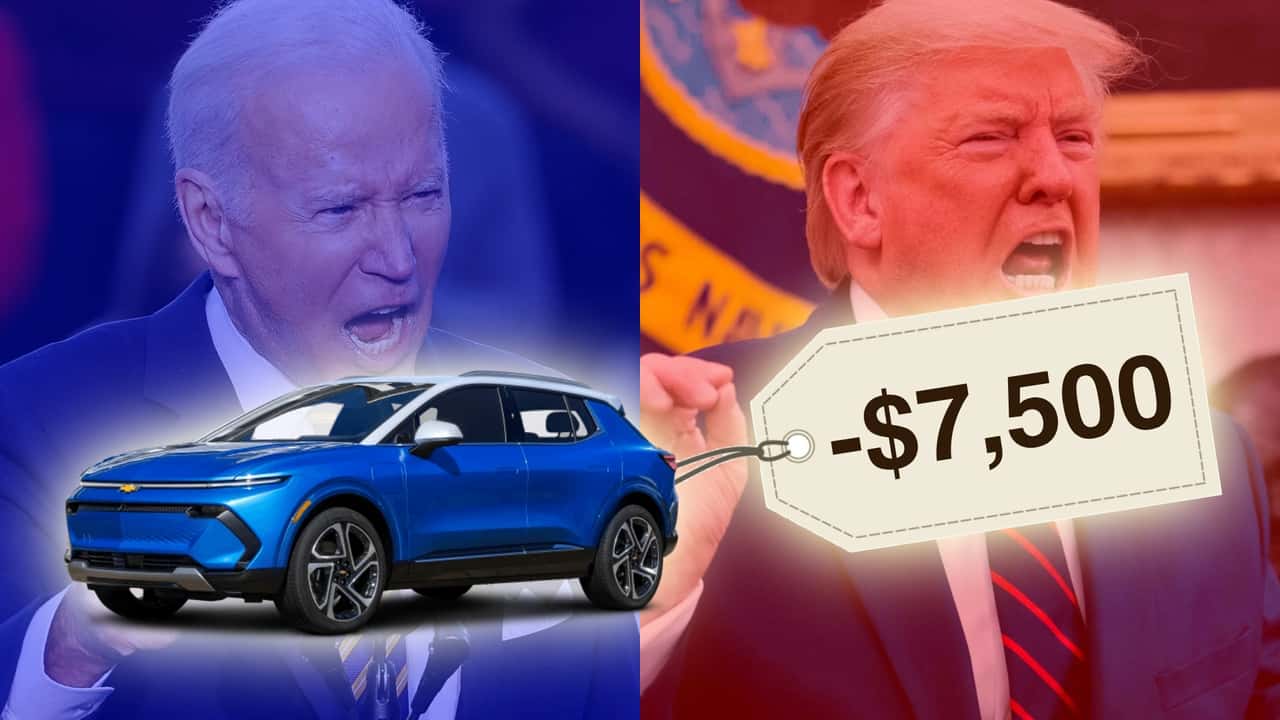
已成为党派文化中的众多陈词滥调之一,电动汽车税收抵免是否会在即将到来的
11 月选举中受到威胁?考虑到当前的电动汽车税收抵免已经成为现任国会议员和总统候选人威胁废除的主题,情况很可能就是这样。
电动汽车税收抵免是拜登绿色目标的关键
Annie White 自 2012
年以来一直在撰写有关汽车行业的文章。她曾担任《汽车与司机》杂志的编辑
,拥有政治学和气候变化学位,并对有关通往更可持续未来之路的故事感兴趣。
原文
What The 2024 Election Could Mean For EV Tax Credits
Campaign rhetoric points to an uncertain future for EV
incentives if Republicans win big this fall.
Mar 25, 2024 at 10:30am ET
By: Annie
White
Almost since the beginning of the modern hybrid and electric
vehicle movement, the United States government has offered tax
incentives for drivers who were willing to take a risk on—and
usually pay a premium for—a new automotive technology. In 2002, two
years after the Toyota Prius first hit dealer lots in the US and
four years before Tesla would
show off a 250-mile EV, the federal government launched its
first incentives for the purchase of new hybrid vehicles.
Tax credits for hybrid, plug-in hybrid, and electric vehicles have
been a fixture of the American car buying experience ever since,
and
research shows they’ve been effective at
encouraging the adoption of EVs and hybrids in the United
States.
But with EVs
serving as one of the many shibboleths in a terminally partisan
culture, is the EV tax credit at stake in the coming November
election? Considering that the current iteration of the EV tax
credit has already been the subject of repeal threats from both
sitting members of Congress and presidential hopefuls, that may
well be the case.
EV Tax Credits Are Key To Biden's Green Goals
Automakers and certain regulators are indeed finding ways to
'future-proof' any major changes to what's trending to be a mostly
electric future.
Recently, Stellantis
signed a
pact with several other automakers to follow California's
stricter emissions rules, and new EV and battery factories in the
Red State south—which are
bringing tens of thousands of new manufacturing jobs—are
unlikely to go anywhere.
But the EV tax credits themselves may be another story.
The current iteration of the EV tax credit is one of the jewels of
President Joe Biden’s crowning legislative achievement, the
Inflation Reduction Act (IRA). When it became law in 2022, the IRA
revamped what had previously been a fairly straightforward tax
credit of up to $7,500 for the purchase of a new EV, though
manufacturers “ran out” after selling a certain amount of them. The
new system
progressively
limited eligibility for the full credit depending on the origin
of battery components and minerals, among other factors.
But it became immediately controversial on the other side of the
aisle. For example, freshman Ohio senator J.D. Vance
introduced a bill last September that would repeal the IRA’s EV
tax credits and establish a $2,500 credit for the purchase of new
vehicles manufactured in the United States. In November, now-former
Republican presidential candidate Nikki Haley
indicated a plan to repeal all of the IRA’s green energy
incentives, the EV credit among them. And the mineral-specific
rules have been a repeated target of Sen. Joe Manchin, the
conservative-leaning West Virginia Democrat who’s retiring from
Congress but whose swing-vote power had a tremendous impact on the
IRA.
By far the most high-profile critic of pro-EV policies, however,
has been former President Donald Trump, who now has the
Republican nomination locked up.
Trump
has repeatedly suggested that he would seek to repeal tax
incentives for EVs in a second term. He has also said that EVs
“don’t go far” and are “too expensive,” that EV incentives are “a
hit job” on the Rust Belt’s manufacturing economy and that
investing in them will somehow
leave America in thrall to China.
With months to go before the polls open, votes can still be
influenced by countless factors large and small including, perhaps,
an interest in preserving access to EV tax credits. But from
today’s vantage point, it seems at least plausible that at least
one of the major seats of federal legislative power could change
hands. Depending on which way the vote swings and how much, the
seats of power could soon be filled by people who are ready and
willing to end tax incentives for electric or alternative fuel
vehicles.
If Biden is re-elected, all signs point to continued investment in
EV infrastructure and at least four more years for the IRA’s EV tax
incentives, which are currently set to sunset in 2032. If both
houses of Congress and the presidency are controlled by Republicans
next January, the party could look to unwind President Biden’s
legislative agenda.
But Mike Murphy, a GOP political consultant and founder of the
EV Politics Project,
says that even then, repeal of the Biden administration’s EV
policies is not a mortal lock.
“You hear a lot of rhetoric” about repealing EV tax credits and
manufacturing incentives, Murphy said, “but whether the votes are
really there? It’s easier to say it on the campaign trail than to
get it done.”
Murphy would expect pushback from the business community and from
governors whose states have seen investments in EV and battery
manufacturing, including key battleground states such as Georgia,
Ohio, and Tennessee.
If a Trump presidency coincides with a Democrat-majority congress,
the executive branch could still hack away at the EV tax
credits by using the federal rule-making process to change how
and where the credits can be applied, though Albert Gore, executive
director of the Zero Emissions Transportation Association, notes
that any such changes would be subject to legal challenge.
Gore also says that the current implementation and rulemaking
around these tax credits was “done with that in mind—that
everything needs to be iron-clad and defensible, because we want
these policies to be durable.”
Why Repeal?
EV tax credits have certainly been durable so far. They have
persisted and evolved over the course of the last two decades, and
there are policy arguments in favor on both sides of the political
aisle.
The original 2002 tax credit for new hybrid vehicles was born
during the George W. Bush administration and was designed, at least
in part, to encourage people to purchase fuel-efficient vehicles at
a time when the United States was recovering from what turned out
to be the
first pangs of a major energy crisis—not to mention,


 美国东部时间2024 年 3 月 25 日上午10:30