新浪博客


 ,
,
 Jinhai
ShiMing
Liu
Jinhai
ShiMing
Liu1
School of International Economics and Trade, Shanghai Lixin University of Accounting and Finance, No. 995 Shangchuan Road, Shanghai 201209, China
2
School of Business Administration, Shanghai Lixin University of Accounting and Finance, No. 995 Shangchuan Road, Shanghai 201209, China
*
Author to whom correspondence should be addressed.
first_page
settings
Order Article Reprints
Open AccessArticle
Cultural Distance, Classroom Silence and Culturally Responsive and Inclusive Education: Evidences from Migrant College Students in Shanghai
by Fei
Peng,
Lili
Kang,
Jinhai
ShiMing
Liu
Fei
Peng,
Lili
Kang,
Jinhai
ShiMing
Liu1
School of International Economics and Trade, Shanghai Lixin University of Accounting and Finance, No. 995 Shangchuan Road, Shanghai 201209, China
2
School of Business Administration, Shanghai Lixin University of Accounting and Finance, No. 995 Shangchuan Road, Shanghai 201209, China
*
Author to whom correspondence should be addressed.
Behav. Sci.
Received: 25 November 2022
(This article belongs to the Section
Download
Versions
Abstract
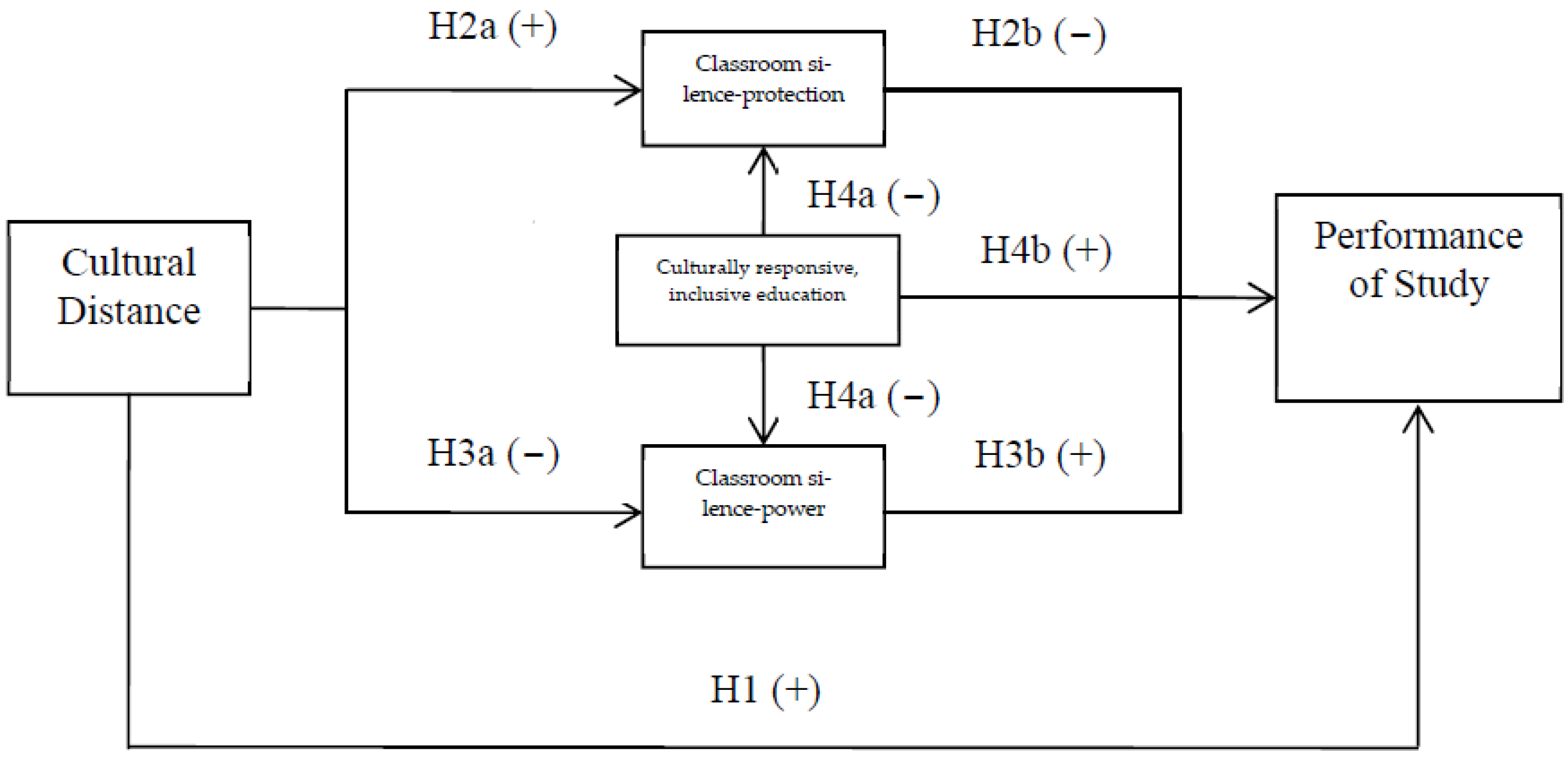
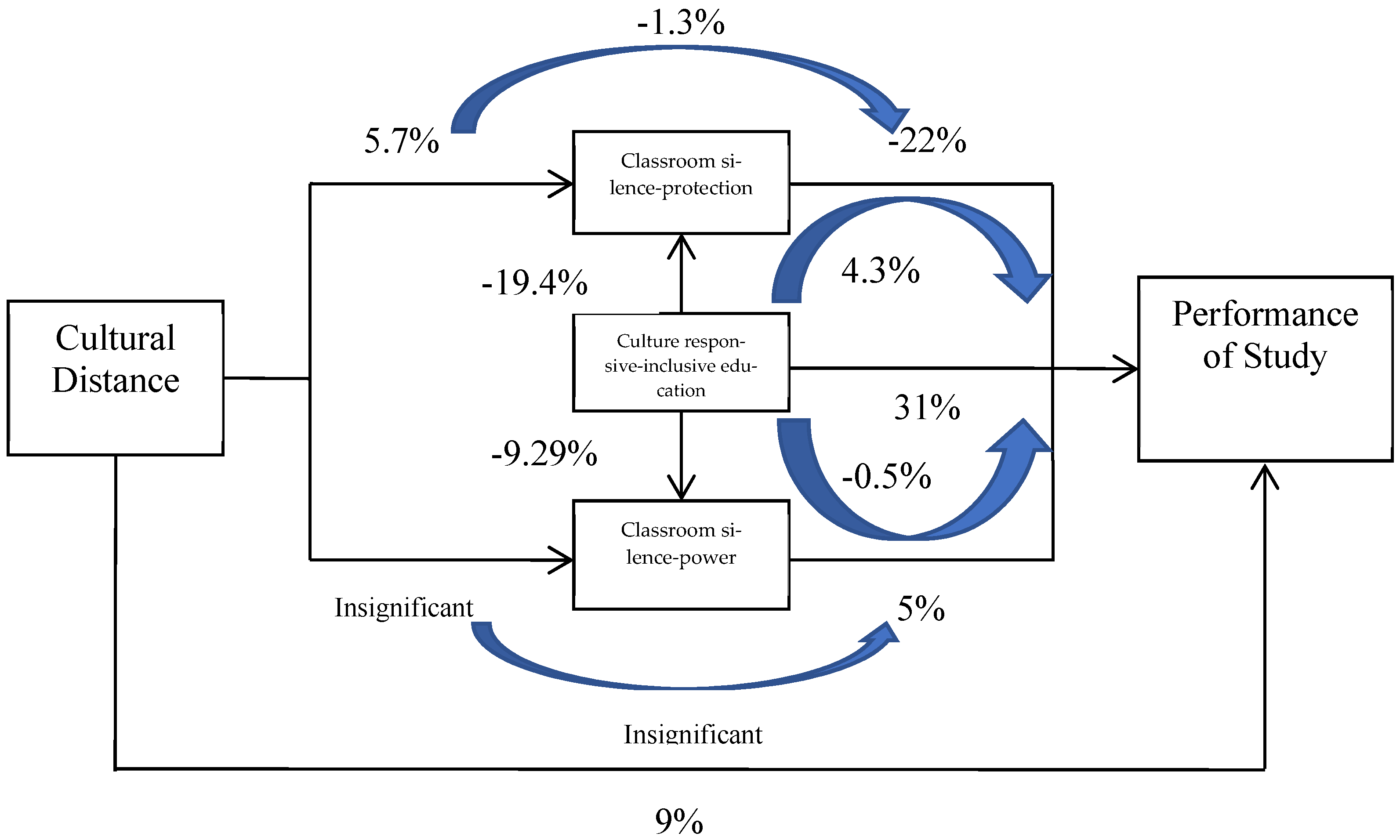
This paper investigated the relationship between cultural distance, classroom silence, and the performance of culturally responsive and inclusive education (CRIE) using a survey of 1051 college students in Shanghai in 2022. We found a significantly positive association between migrant students’ cultural distance and their perceived learning gains in class. Students’ cultural distance increased their classroom silence as a form of protection but had no significant effect on their classroom silence as a sign of power. The classroom silence as protection decreased students’ perceived learning gains. However, classroom silence as power could be used by both local and migrant students as a hold-up strategy to strengthen their influence in class discussions, which could improve their perceived learning gains. Teachers’ CRIE played the most important role in migrant students’ perceived learning gains, while the effectiveness of CRIE was also actually dependent on the different channels and mechanisms of cultural distance and classroom silence. A cautious identification of classroom silence will improve the effectiveness of CRIE. Suggestions are offered to lighten the practice of educators, administrators, and instructors who face classroom silence from subnational migrant students.Keywords:
cultural distance;